The Big Island has the youngest, most pristine reefs in the Hawaiian chain, water clarity that regularly hits 100+ feet, and a volcanic coastline full of protected bays and coves perfect for snorkeling. After snorkeling nearly every accessible spot on this coast, here are the 8 best, with honest assessments of what you'll actually find at each one.
1. Kealakekua Bay: The Best Snorkeling in Hawaii
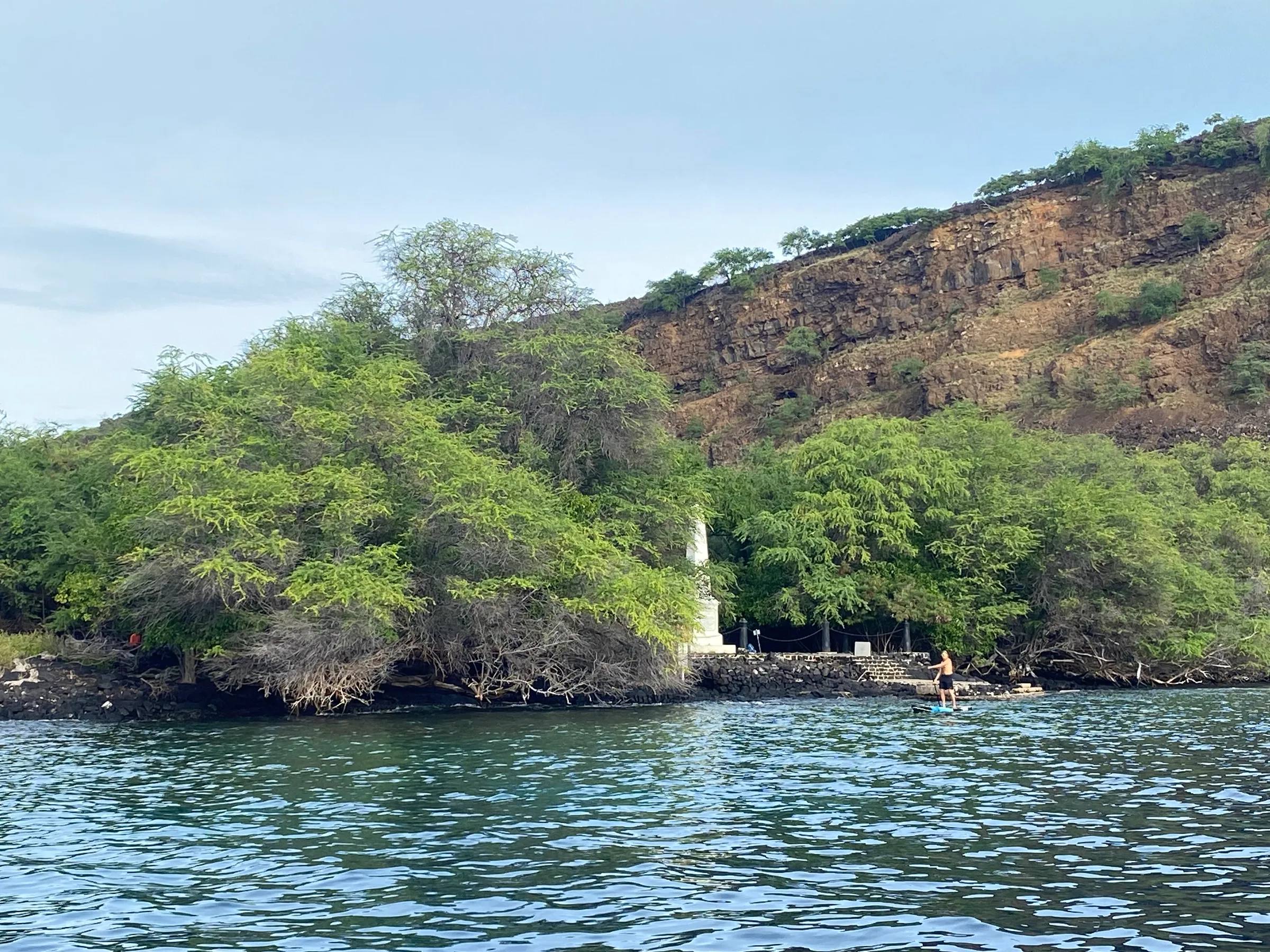
No contest. Kealakekua Bay is a marine sanctuary with visibility that can exceed 150 feet on calm days. The coral coverage along the monument side of the bay is the densest and healthiest you'll find anywhere in the state. You'll see yellow tangs in clouds, parrotfish crunching coral, eels in crevices, and almost certainly spinner dolphins. A resident pod of 100+ swings through most mornings.
The catch: you can't drive to the snorkeling side. Your options are a snorkel boat tour (most popular), kayaking across from the boat ramp, or hiking the steep Ka'awaloa Trail (2 miles down, 1,400 feet of elevation gain coming back, which is brutal in the heat).
Our pick: Book a morning tour with Hawaii Oceanic or Coral Reef Adventures. You'll get 1-2 hours in the water, all gear provided, and often dolphin encounters on the ride over.
Difficulty: Easy from a boat (you swim right off the back) | Best time: Morning for calm water and dolphins | Location: Captain Cook
2. Kahalu'u Beach Park: Best for Beginners and Families
Kahalu'u Beach is where Kona locals learned to snorkel as kids. It's a small, sheltered bay with a natural breakwater of lava rock that keeps the water calm. Walk in waist-deep, put your face down, and you're immediately surrounded by reef fish and green sea turtles. Turtles are here every single day.
The reef is shallow (3-8 feet), making it perfect for kids and first-time snorkelers. The downside is that it's popular, so show up by 8 AM for parking and space. There's also a reef education group (Kahalu'u Bay Education Center) on-site that teaches visitors how to snorkel responsibly.
Difficulty: Beginner-friendly | Best time: Early morning before crowds | Location: Kailua-Kona, south end of Ali'i Drive
3. Two Step (Honaunau Bay): Best Shore Entry for Experienced Snorkelers
Two Step gets its name from the natural lava rock "steps" you use to enter the water: two flat ledges that make it easy to walk in without scrambling over sharp rock. Once you're in, you drop into 15-25 feet of crystal-clear water above beautiful coral formations.
The marine life here is excellent: big schools of surgeonfish, hawksbill turtles, spotted eagle rays, and occasional white-tip reef sharks (harmless). The reef slopes down to deeper water along the south edge, where more experienced snorkelers can find octopus and larger pelagics.
Pu'uhonua o Hōnaunau (Place of Refuge) is right next door and worth walking through after your snorkel for the cultural significance and the massive tiki carvings.
Difficulty: Intermediate (lava rock entry, some current) | Best time: Morning for calm conditions | Location: Honaunau, south of Captain Cook
4. Hapuna Beach: Best White Sand Beach with Good Snorkeling
Hapuna Beach is regularly ranked among the top 10 beaches in the world, and for good reason. It's half a mile of white sand with turquoise water. The snorkeling isn't as dramatic as Kealakekua or Two Step (the sandy bottom means less coral), but the north end near the rocky point has decent reef with turtles, tangs, and triggerfish.
Hapuna is better thought of as a beach day that includes some snorkeling rather than a dedicated snorkel spot. The water is gorgeous for swimming, bodyboarding, and just floating. Come here when you want to relax, not hunt for marine life.
Difficulty: Easy (sandy entry, gentle slope) | Best time: Morning before afternoon winds | Location: Kohala Coast
5. Kua Bay: The Hidden Gem That's Not So Hidden Anymore
Kua Bay (Manini'owali) is a crescent of white sand tucked between lava flows, and it feels more remote than it actually is. The snorkeling along the rocky edges on both sides of the bay is surprisingly good, with healthy coral, tropical fish, and often spinner dolphins in the morning.
The water here is brilliantly clear, and the bay's sheltered position means it's usually calm. Fair warning: there's no shade whatsoever. Bring an umbrella or plan your visit for early morning or late afternoon. Parking lot fills up by 10 AM on weekends, so get there early.
Difficulty: Easy to moderate | Best time: Early morning | Location: North Kona, off Highway 19
6. Richardson Ocean Park: Best Snorkeling Near Hilo
Richardson Beach is the go-to snorkel spot on the Hilo side, and it's wildly underrated. Small protected pools behind natural lava breakwaters create calm, clear snorkeling areas teeming with fish and turtles. The black sand beach gives way to tide pools full of sea urchins, crabs, and anemones.
Because it's on the Hilo side, Richardson gets way fewer tourists than Kona spots. On a weekday morning, you might have the whole place to yourself. The water is slightly cooler than Kona (the east side gets more runoff), but visibility is still good in the calm pools.
Difficulty: Easy (protected pools) | Best time: Morning, calm days | Location: Hilo
7. Mahukona Beach Park: The Old Sugar Pier
Mahukona is a former sugar loading dock in North Kohala, and the old pier pilings are now covered in coral and marine life. You snorkel over submerged machinery, rail tracks, and anchor chains. It's part snorkeling, part underwater archaeology. The fish are big and bold here, probably because so few people make the drive.
Getting in requires climbing down a metal ladder from the pier, not for everyone, but fine for reasonably mobile adults. The snorkeling area is between the pier and the rocky coastline, typically 10-25 feet deep.
Difficulty: Intermediate (ladder entry, some current) | Best time: Morning, calm conditions only | Location: North Kohala
8. A-Bay (Anaehoomalu Bay): Best for Waikoloa Resort Guests
A-Bay at the Waikoloa Beach Marriott has easily accessible snorkeling right off the resort beach. The coral isn't as dramatic as the southern Kona spots, but there's plenty of reef fish, occasional turtles, and it's dead simple. Walk off the sand, swim to the rocks on either side, and start looking around. Paddleboard and kayak rentals on the beach make it easy to combine activities.
Difficulty: Beginner-friendly | Best time: Morning | Location: Waikoloa
Guided Snorkel Tours vs. Going on Your Own
Both are great. It depends on what you want.
Book a tour when:
- You want to snorkel Kealakekua Bay (boat access is way easier than hiking or kayaking)
- You're new to snorkeling and want instruction and equipment
- You want to see dolphins (tour boats know where they are)
- You're visiting during winter swells and want a captain to find the calmest spot
Go DIY when:
- You're comfortable in the ocean and have your own gear (or plan to rent)
- You want to explore at your own pace
- You're snorkeling shore-accessible spots like Kahalu'u, Two Step, or Richardson
- You're on a budget
Snorkel Gear: Rent or Bring Your Own?
If you're doing more than one snorkel outing (and you should), rent a set for the week. Kona has multiple shops where $20-40 gets you mask, snorkel, and fins for 5-7 days, which is way cheaper than renting at each beach. The gear quality is decent, and having your own set means you can snorkel any time the mood strikes.
If you're a serious snorkeler, bring your own mask. A well-fitting mask makes all the difference, and rental masks have been on a thousand other faces. Prescription masks are another reason to bring your own. Browse snorkel gear rental options.
Water Conditions by Season
Summer (May-September): Calmest water on the Kona (west) coast. This is peak snorkeling season with flat water, maximum visibility, and the warmest temperatures (78-82°F). The Hilo side can get afternoon swells.
Winter (November-March): North and west swells arrive from Pacific storms, making some spots (Hapuna, Kua Bay) too rough. Protected spots like Kahalu'u and Two Step remain swimmable most days. Water temperature drops to 74-76°F, still comfortable with a rash guard or thin wetsuit. The trade-off: this is whale watching season, and you might hear humpback whale songs underwater while snorkeling.
Spring/Fall: The sweet spot. Good conditions, fewer crowds, comfortable water. If you can time your trip for April, May, September, or October, do it.
Marine Life You'll See
The Big Island's reefs are home to over 600 species of fish and dozens of coral species. Common sightings across most snorkel spots:
- Green sea turtles (honu): Seen at every spot on this list. They graze on algae in shallow water and often rest on the surface. Keep 10 feet of distance. It's federal law.
- Yellow tangs: Bright yellow schooling fish, often in huge groups. The Big Island has the highest concentration in Hawaii.
- Spinner dolphins: Common at Kealakekua Bay and sometimes at Kua Bay. They spin in the air when leaping, hence the name.
- Spotted eagle rays: Graceful, diamond-shaped rays with white spots. Often seen at Two Step and deeper reef areas.
- Humuhumunukunukuāpua'a: Hawaii's state fish (reef triggerfish). Small, colorful, and surprisingly aggressive about defending their territory.
- Moray eels: Lurking in rock crevices. They look scary with their gaping mouths, but they're just breathing. They're not aggressive unless provoked.
Safety Tips
- Never snorkel alone. Buddy system, always.
- Check conditions before entering. If waves are breaking on the entry point, pick a calmer spot.
- Don't touch coral. It's alive, it's fragile, and touching it kills it. Also, some coral cuts get nasty infections.
- Wear reef-safe sunscreen. Regular sunscreen kills coral. Look for "reef safe" on the label. Hawaii law restricts certain chemicals.
- Watch for currents. If you find yourself drifting despite swimming in place, angle toward shore (not directly against the current) and exit the water.
- Jellyfish: Portuguese man-of-war occasionally wash into bays, especially on the windward side. If you see blue blobs on the beach, be cautious.
Night Snorkeling with Manta Rays
A completely different experience that deserves its own section. The manta ray night snorkel in Kona puts you in the water after dark at Keauhou Bay, where you float above illuminated lights that attract plankton, and the plankton attracts manta rays with wingspans up to 16 feet. They barrel-roll inches from your face.
It's the most popular activity on the Big Island for good reason. Read our complete manta ray night snorkel guide for everything you need to know.
Snorkeling with Kids
The Big Island is excellent for family snorkeling. Best spots for kids:
- Kahalu'u Beach: shallow, protected, turtles right there. The absolute best for little ones.
- A-Bay: gentle entry, rental gear on-site, lifeguards.
- Richardson Beach: tide pools for non-swimmers, protected snorkel area for confident kids.
Most boat snorkel tours accept kids ages 5+ and provide child-sized gear. The boat ride itself is usually a hit with kids, even if they're not that excited about the snorkeling. Browse all snorkeling tours to find family-friendly options.