Floating in warm Pacific water at night while a 14-foot manta ray barrel-rolls six inches beneath you. That's the manta ray night snorkel in Kona, and it's one of those rare experiences that actually lives up to the hype. I've done this dozens of times and still get chills watching these massive, gentle creatures glide through the light.
Kona's coast is the only place in the world where you can reliably swim with wild manta rays on any given night of the year. The success rate hovers around 90%, the water is calm, and you don't need any diving experience. Here's everything you need to know to plan your trip.
What Actually Happens on a Manta Ray Night Snorkel
If you've never done this before, the whole concept sounds a little wild. Jump in the ocean after dark and wait for giant rays to show up? Here's how it works, step by step.
You'll check in about 30-45 minutes before sunset at either Keauhou Bay Harbor or Honokohau Harbor, depending on which tour you book. After getting fitted for a wetsuit, mask, and snorkel, you'll board the boat for a short ride to the manta site.
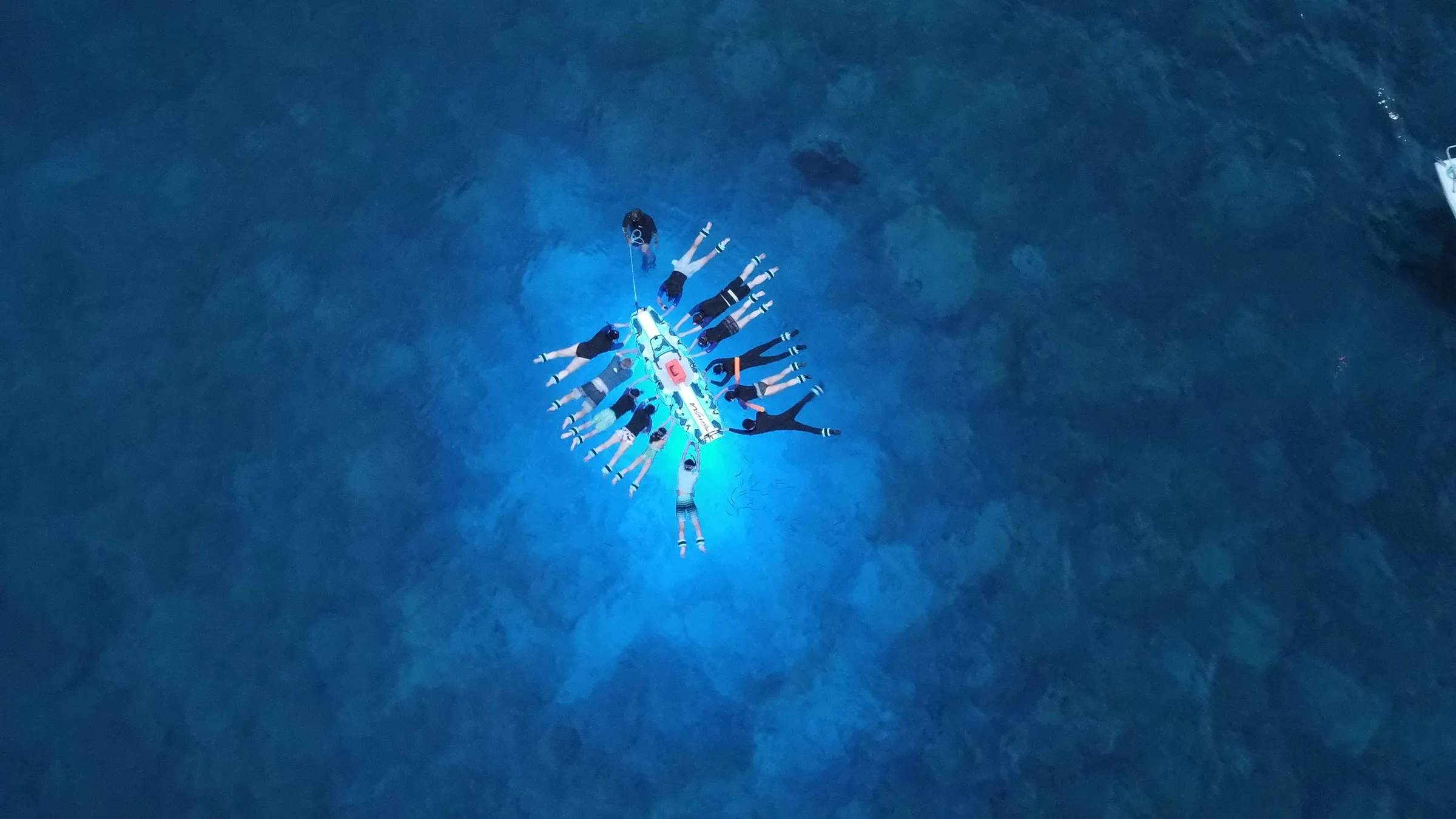
Once the sun drops, your crew anchors and sets up the "manta board," a surfboard-sized flotation device with bright underwater lights mounted underneath. You hold on, float face-down, and breathe through your snorkel. The lights attract plankton, and the plankton attracts mantas.
Within minutes, you'll see the first dark shape gliding toward you from the deep blue. Then another. On a good night, you might have 8-15 mantas doing continuous barrel rolls right below you, mouths wide open, scooping up plankton. Their wingtips pass within inches of your face. The whole water session lasts 45-60 minutes, and honestly, it goes by way too fast.
The Three Manta Ray Sites Along Kona's Coast
Not all manta ray snorkel tours go to the same spot. There are three known feeding sites along the Kona coast, and each has a different character.
Manta Village at Keauhou Bay
This is the original manta site and still the most popular. Manta Village sits just offshore from the Outrigger Kona Resort, where the hotel's floodlights first attracted plankton (and mantas) decades ago. Tours departing from Keauhou Bay get here in about 5 minutes, so there's practically no boat ride.
Pros: Short transit, very calm waters in the bay, highest concentration of regular mantas. This is where researchers have documented the most named individuals.
Cons: Can get crowded with multiple tour boats on busy nights. Peak season (December-March) sometimes means 8-10 boats at the site.
Manta Heaven at Honokohau
Manta Heaven (also called Makako Bay) is north of the airport, and tours depart from Honokohau Harbor. This site tends to be less crowded because fewer operators run from this harbor.
Pros: Fewer boats, often a more intimate experience. Some operators report seeing larger mantas here.
Cons: Slightly longer boat ride. Water can be a bit rougher since it's more exposed than Keauhou Bay. Manta sightings are somewhat less consistent than Manta Village, though still well above 80%.
Mauna Kea Bay
The least-visited site, located further north along the Kohala coast. Very few commercial tours go here regularly. It's more of a "backup" site when conditions aren't ideal at the other two locations. If you're staying in Waikoloa and want to explore on your own, this is worth knowing about, but for a guided tour, you'll almost certainly end up at Manta Village or Manta Heaven.
Keauhou Bay vs. Honokohau Harbor: Which Departure?
Your departure harbor determines which manta site you visit, and there are practical differences worth considering.
Keauhou Bay departures (like Manta Magic by Hawaii Oceanic) give you a 5-minute boat ride to Manta Village. Parking is easy, the bay is protected, and the short transit means more time in the water. If you get seasick easily, this is your best bet.
Honokohau Harbor departures (like Coral Reef Manta Mania) take you to Manta Heaven. The harbor is larger and easier to find, with better facilities. The ride out is 10-15 minutes, giving you a nice sunset cruise before the main event.
My honest recommendation: if it's your first manta snorkel, go with a Keauhou departure. The calmer water and shorter ride reduce any anxiety about the experience. If you've done it before and want fewer crowds, try Honokohau.
Snorkel vs. Scuba: Two Ways to See Mantas
Most people do the snorkel version, but manta ray scuba dives offer a completely different perspective.
Snorkeling (Most Popular)
You float at the surface holding the manta board. Mantas feed right below you, sometimes brushing your chest as they roll. No certification needed. If you can breathe through a snorkel, you're good. This is the iconic experience most people picture, and it works for ages 5 to 85.
Scuba Diving
Certified divers can sit on the ocean floor (about 25-40 feet deep) and watch mantas from below as they swoop overhead. Operators like Kona Honu Divers and Kona Diving Company run dedicated manta dives. You'll also find shore-entry manta dives that skip the boat entirely.
The scuba perspective is breathtaking. Watching mantas silhouetted against the light from below is ethereal. But the snorkel version puts you closer to the action. Both are incredible; it just depends on what you're after.
Combo Tours: Get More for Your Evening
Several operators bundle the manta snorkel with other experiences. The most popular combo is a sunset sail plus manta ray snorkel. You'll cruise the Kona coast watching the sun drop, maybe spot dolphins or whales (in season), then anchor up for the manta portion after dark. It makes for a full evening on the water and is solid value.
If you're into more adventurous night diving, check out pelagic black water dives. A completely different experience where you float in deep open ocean and watch bizarre deep-sea creatures rise from the abyss. Not for the faint of heart, but absolutely mind-blowing.
Understanding Manta Rays: What You're Swimming With
The mantas in Kona are reef manta rays (Mobula alfredi), and they're impressive animals. Adults typically span 10-14 feet from wingtip to wingtip, though some of Kona's resident females measure over 16 feet. They weigh 500-1,500 pounds, live 40+ years, and have the largest brain-to-body ratio of any fish.
These aren't mindless filter feeders. They recognize individual humans, show preferences for certain dive sites, and display distinct personalities. Researchers at the Manta Pacific Research Foundation have catalogued over 300 individual mantas in Kona's waters, each identified by unique spot patterns on their belly (like fingerprints). Many have names: Big Bertha, Lefty, Shadow, Koie.
Despite their size, manta rays have no stinger, no barb, no teeth that could hurt you. They're completely harmless. The closest they come to "dangerous" is an accidental bonk on the head when they misjudge a barrel roll, and even that just startles you.
The Feeding Behavior You'll Watch
What makes the night snorkel work is plankton. Tiny crustaceans called copepods are drawn to light, which is why the manta board has those bright underwater lights. The plankton swarms around the light, creating a concentrated feeding station. Mantas detect this from a distance and come cruising in.
When feeding, mantas unfurl their cephalic fins (the horn-like appendages by their mouth) to funnel water and plankton into their gill plates. If the plankton is dense enough, they'll start doing continuous barrel rolls, somersaulting over and over to pass through the plankton cloud multiple times. This is when the experience goes from "amazing" to "I can't believe this is real."
A Brief History of Kona's Manta Ray Tourism
The whole thing started by accident in the 1970s. The old Kona Surf Hotel (now the Outrigger) had floodlights that illuminated the ocean at night. Plankton gathered in the light, and mantas followed. Guests would lean over the seawall and watch mantas feeding below. It became the hotel's best attraction.
In the early 1990s, a few dive operators realized they could bring guests to the site for a closer look. By 2000, manta night snorkeling was a full-blown industry. Today, a dozen operators run nightly tours, and the experience draws visitors from around the world to Kailua-Kona.
There was controversy in 2013-2014 when overcrowding led to proposals for regulations. The county eventually established voluntary guidelines: boat limits, light protocols, and a code of conduct that most operators follow. The system isn't perfect, but it works reasonably well.
Who Should (and Shouldn't) Do This
The manta ray night snorkel is more accessible than most people expect. You need to be able to:
- Float comfortably while holding the manta board (it supports your weight)
- Breathe through a snorkel for 45-60 minutes
- Handle being in open water after dark
- Climb a boat ladder to get back on board
You do NOT need to be a strong swimmer. You do NOT need experience snorkeling. The manta board keeps you floating, and guides are in the water with you the entire time. Kids as young as 5 regularly do this without issues.
Skip this if: You have a strong fear of open water at night that you don't think you can manage, you have severe motion sickness that medication doesn't help, or you have a medical condition that prevents you from being in the ocean. If you're on the fence about fear, most operators offer a full refund if you get in the water and decide it's not for you.
What to Wear and Bring
Most tours provide everything: wetsuit, mask, snorkel, fins. Here's what to bring from your end:
- Swimsuit: Wear it under your clothes. You'll change into the wetsuit on the boat.
- Towel: Some boats provide them, but bring your own to be safe.
- Light jacket: The boat ride back can be chilly when you're wet.
- Motion sickness remedy: Dramamine, Sea-Bands, or ginger chews if you're susceptible. Take them 30 minutes before departure.
- Skip the GoPro (maybe): More on this below.
Don't bring: jewelry (mantas are attracted to shiny objects and may bump you), heavy sunscreen (you don't need it at night, and it harms reef life), or anything you can't afford to lose overboard.
Photography and Video Tips
Here's my honest take: your first manta snorkel, leave the camera in the bag. Seriously. You're floating face-down with one hand on the manta board, and trying to operate a GoPro with the other hand means you're not fully present for this incredible experience. Every operator sells professional photos and video of your group, so buy those instead.
If you've done the snorkel before and want to bring a camera on round two:
- GoPro with a red filter works best. The underwater lights create a blue cast that the red filter corrects.
- Set it to video, not photo. You'll grab stills from the video later.
- Use a wrist lanyard. No exceptions. Cameras slip out of cold, wet hands.
- Turn off the flash. Flash startles the mantas and annoys your group.
- Wide angle is your friend. The mantas are huge and close. You want to capture the whole animal.
Best Time of Year and Moon Phase
Mantas are in Kona year-round, so there's no "wrong" time to go. Still, some patterns are worth knowing:
Moon phase matters more than season. Darker nights (new moon and the week around it) tend to produce better manta encounters because the artificial lights are relatively brighter, creating a stronger plankton concentration. Full moon nights still work, but the success rate drops slightly to around 80-85%.
Winter (December-March) sees slightly larger plankton blooms, which can mean more mantas. It's also whale watching season, so you might spot humpbacks on your sunset boat ride. The downside is that winter brings more tour groups, so sites can be crowded.
Summer (June-September) has calmer ocean conditions and fewer tourists. Manta sightings are still excellent. If you can choose, a new moon week in September or October is the sweet spot: great mantas, fewer crowds, perfect water.
Pricing: What You'll Actually Pay
Manta ray night snorkel tours range from about $95 to $160 per adult, depending on the operator, boat size, and whether it's a combo tour. Here's the general breakdown:
- Budget ($95-115): Larger boats, bigger groups (20-40 people), less personal attention. Still a great experience.
- Mid-range ($115-140): Smaller boats, groups of 12-20, more guide interaction. Most popular price point. Tours like Manta Magic and Manta Mania fall here.
- Premium ($140-160+): Small groups (6-10), premium boats, often includes food and drinks. Sometimes combined with a sunset cruise.
- Scuba manta dives ($150-200): Require PADI Open Water certification. Two-tank dives that include a reef dive before the manta dive.
Kids usually get a $10-20 discount. Most operators offer free cancellation up to 24 hours before the tour.
Browse all available manta ray snorkel tours and manta ray dives to compare prices and availability.
Frequently Asked Questions
What if no mantas show up?
It happens about 10% of the time. Most operators offer a free rebooking or partial refund if zero mantas appear. Ask about the cancellation policy when you book. Even on "no manta" nights, you'll often see other marine life like octopus, reef fish, and sometimes dolphins passing through.
Can kids do the manta ray night snorkel?
Yes. Most operators accept children ages 5+ (some say 4+). Kids wear smaller wetsuits and hold the manta board alongside parents. It's surprisingly kid-friendly because there's zero swimming required. You just float and watch.
Will I get seasick?
The boat ride is short (5-15 minutes), but some people feel queasy floating face-down in the swells. Take Dramamine or Bonine 30 minutes before departure. Ginger chews also help. If you're seriously prone to seasickness, choose a Keauhou departure for the calmest conditions.
Is it safe?
Extremely safe. Manta rays are harmless. No stinger, no teeth, no aggression toward humans. Guides are in the water with you at all times. The main "risk" is minor: water up your snorkel, a manta bump, or general nervousness about night ocean swimming. Thousands of people do this every week without incident.
Do I need to know how to swim?
Not really. The wetsuit and manta board provide enough buoyancy that you float without any effort. You need to be comfortable putting your face in the water and breathing through a snorkel, but actual swimming ability is not required.
How far in advance should I book?
During peak season (December-March), book 2-3 weeks ahead. During shoulder and off-season, 3-5 days is usually fine. Same-day bookings are sometimes available but risky because popular tours sell out.
Can I snorkel with mantas without a tour?
Technically yes. You can enter the water from shore at Keauhou Bay. But I wouldn't recommend it for first-timers. The shore entry is rocky, there are no lights (you'd need your own dive light), and you won't have the safety support of a guide and boat. Do the tour first, then decide if you want to try the DIY version.
What else should I do while I'm in Kona?
The snorkeling along the Kona coast is world-class during the day too. Kealakekua Bay is the crown jewel, with crystal-clear water, spinner dolphins, and massive coral formations. Check out our guide to the best snorkeling spots on the Big Island for more ideas, or browse the top 10 things to do in Kailua-Kona.